For providers paid through VA Community Care

Normal is over.

Earned. Proven. Defended.

You cared for the veteran. Don't give back what you earned by default. When a payment administrator demands money back, iClaimsGuard turns that demand into a tracked, evidence-backed response: you enter the claims it names, and ICG builds the case around each one — the evidence that answers it, and a record that is never erased. The software reports. People decide.

Private demo with sample files · nothing to install · resets when you leave

Scroll

Earned. Proven. Defended.

The practice treated the veteran.
The payment is yours until someone proves otherwise.

From letter to response

One demand letter in.
A complete, defensible response out.

Six steps, each one a real screen from the working product. Every screenshot below was taken on iClaimsGuard itself, walking the sample files through from start to finish.

The demand letter arrives.

Enter what the letter says — payer, the payer's reference, letter date, respond-by date, the total it demands, and the claims it names. Rows paste straight in from a spreadsheet, and the letter itself is stored securely with it.

A preview comes first. If the letter's total and its claim lines don't add up, you see the difference before anything is recorded.
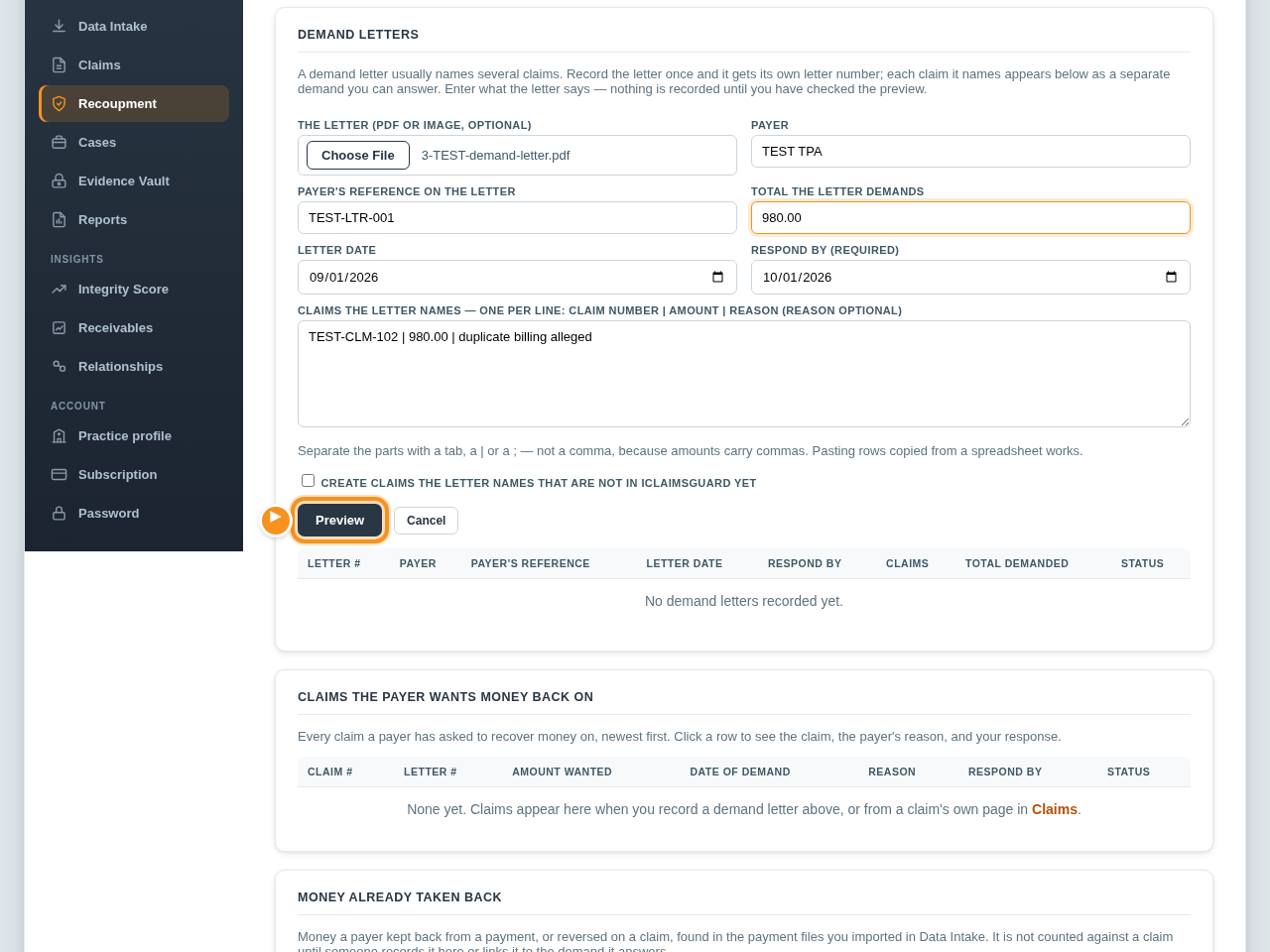
The Start from a demand letter form: payer TEST TPA, reference TEST-LTR-001, total 980.00, letter date, respond-by date, and one claim line, with the sample letter attached.

Every claim it names is tracked.

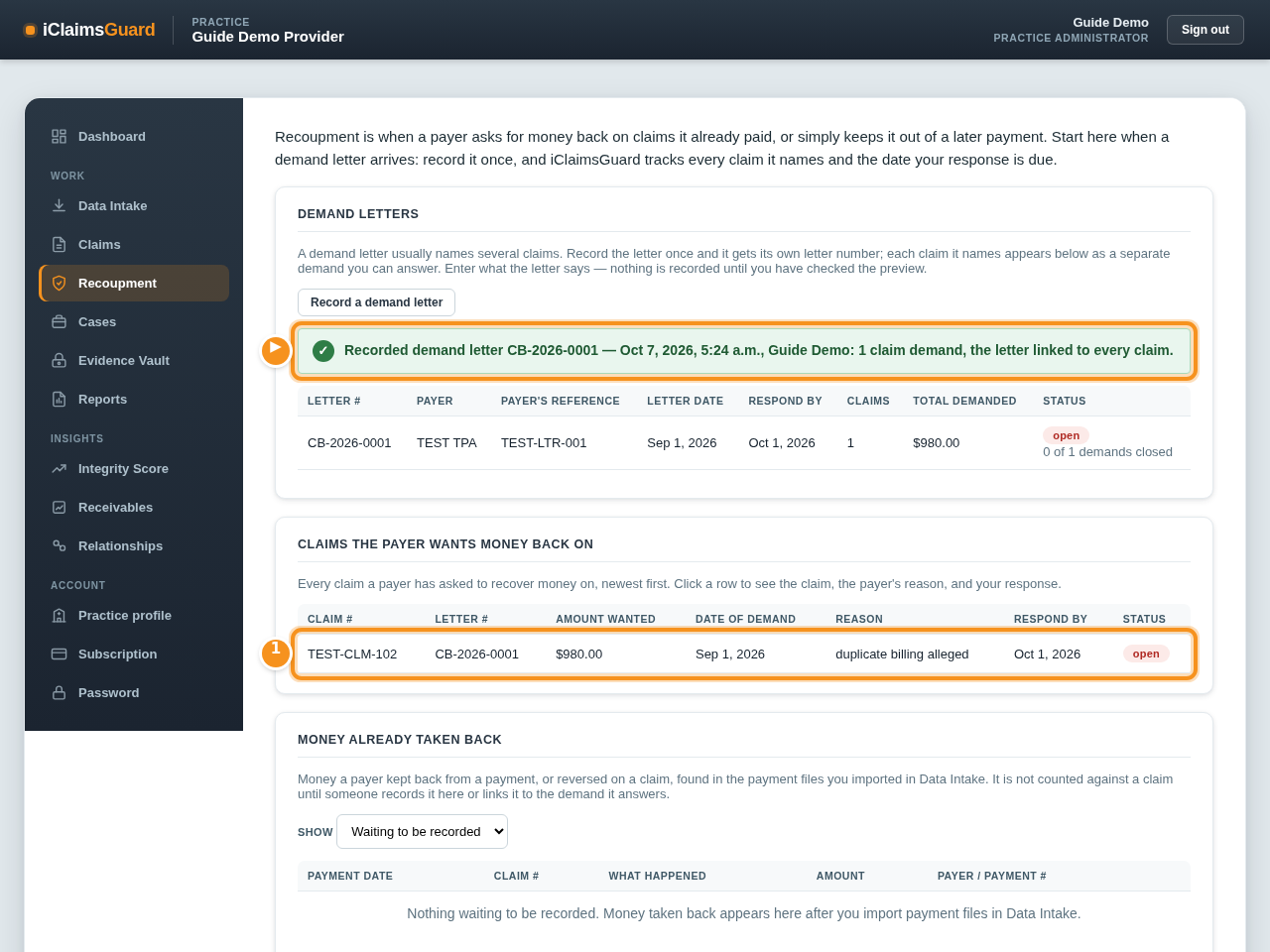
The letter is recorded once and gets its own clawback number. A demand is created on every claim it names, each tied back to the letter, with the letter linked as evidence to all of them.

One letter in, a demand on each claim it names.

Recoupment page after the letter is recorded: clawback CB-2026-0001 from TEST TPA for $980.00, and its demand on claim TEST-CLM-102, open, respond by October 1, 2026.

What was alleged — and on what basis.

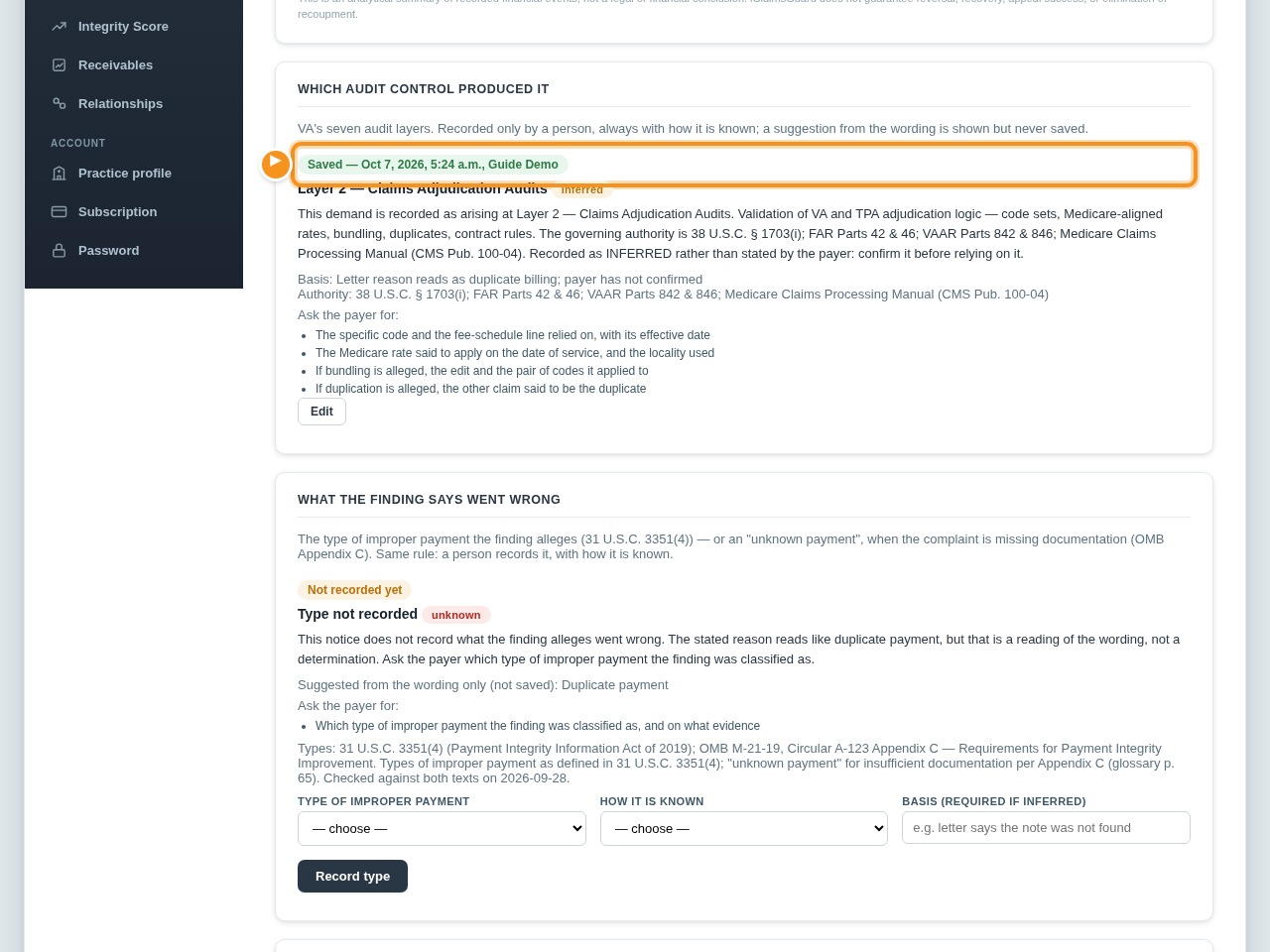
Which of the VA's seven audit layers produced the finding. What type of improper payment it alleges, from the federal list in 31 U.S.C. 3351(4). Whether the amount adds up findings on actual claims or projects a total from a sample.

iClaimsGuard suggests from the reason you record, but never saves a suggestion. A person records each answer and says how it is known — and the app turns it into precise questions to ask the payer.

The demand view with the audit layer recorded as Layer 2, Claims Adjudication Audits, inferred, with its governing authority and a list of what to ask the payer for.

The evidence that answers it.

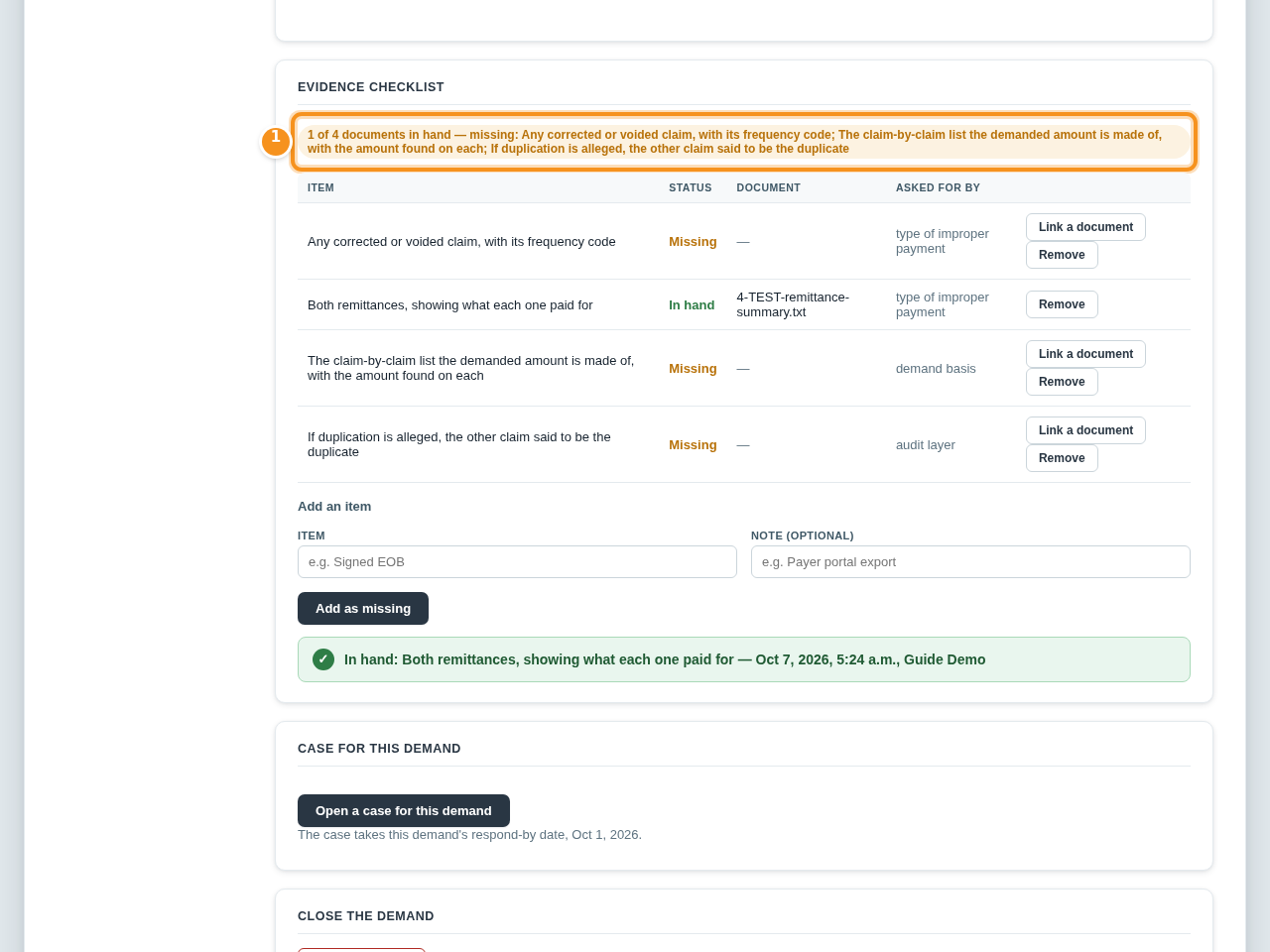
The checklist fills itself from what was recorded: only the documents that fit this demand, each marked missing until a real document is linked from the Evidence Vault.

Every document is fingerprinted with SHA-256 and encrypted when stored, and can be re-checked at any time to prove it has not changed since upload.

The evidence checklist for the demand: one of four documents in hand, the remittance summary linked, the other items still missing.

A case record that is never erased.

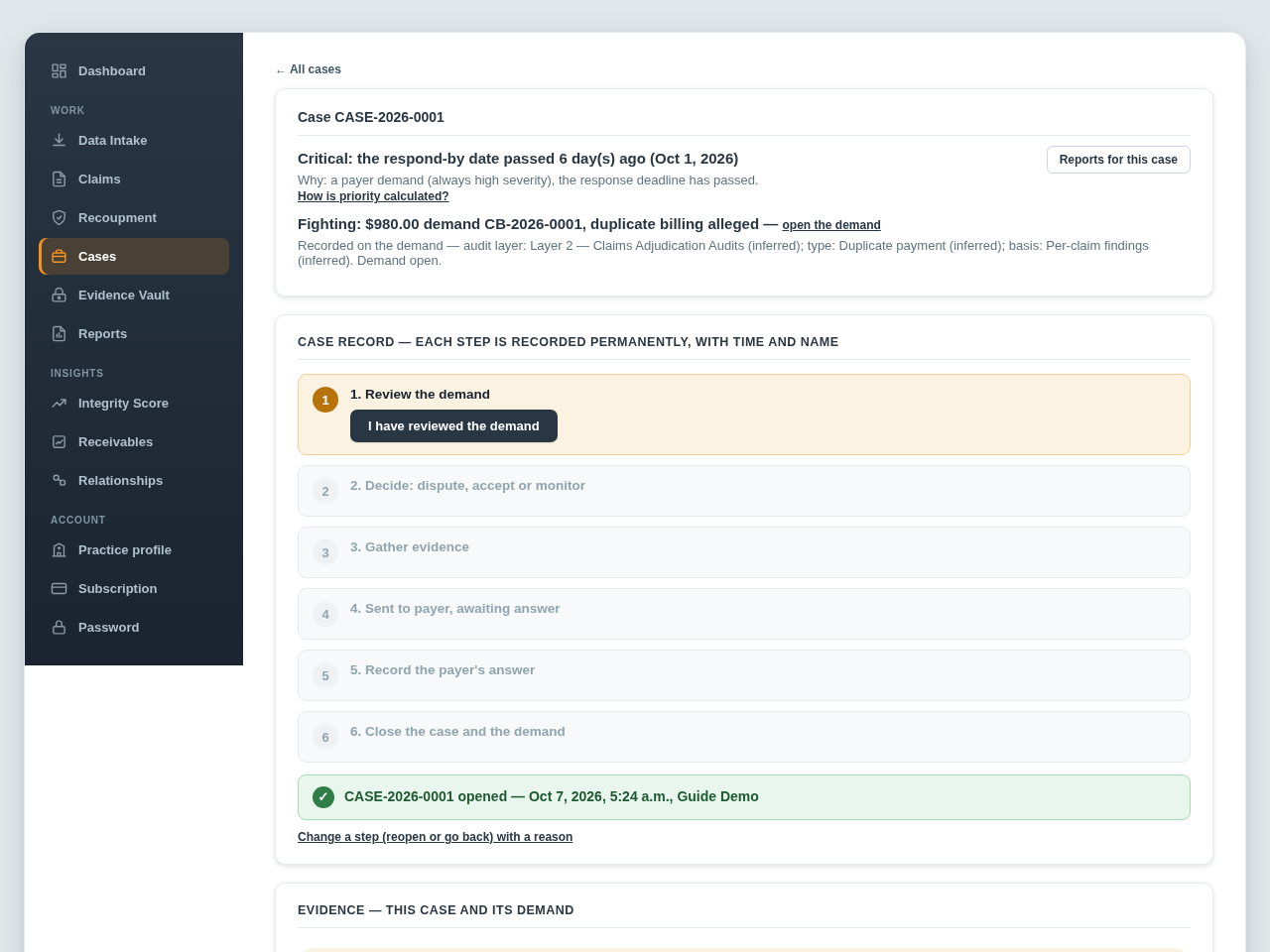
One click opens a case tied to the demand and its deadline. Six steps — review, decide, gather evidence, send, record the payer's answer, close — each kept with the time and the person's name.

Nothing is overwritten. Reopening or going back is a new entry, with its reason.

Case CASE-2026-0001: critical, respond in 2 days, fighting a $980.00 demand, with the six-step case record and the first step current.

The response, ready to file.

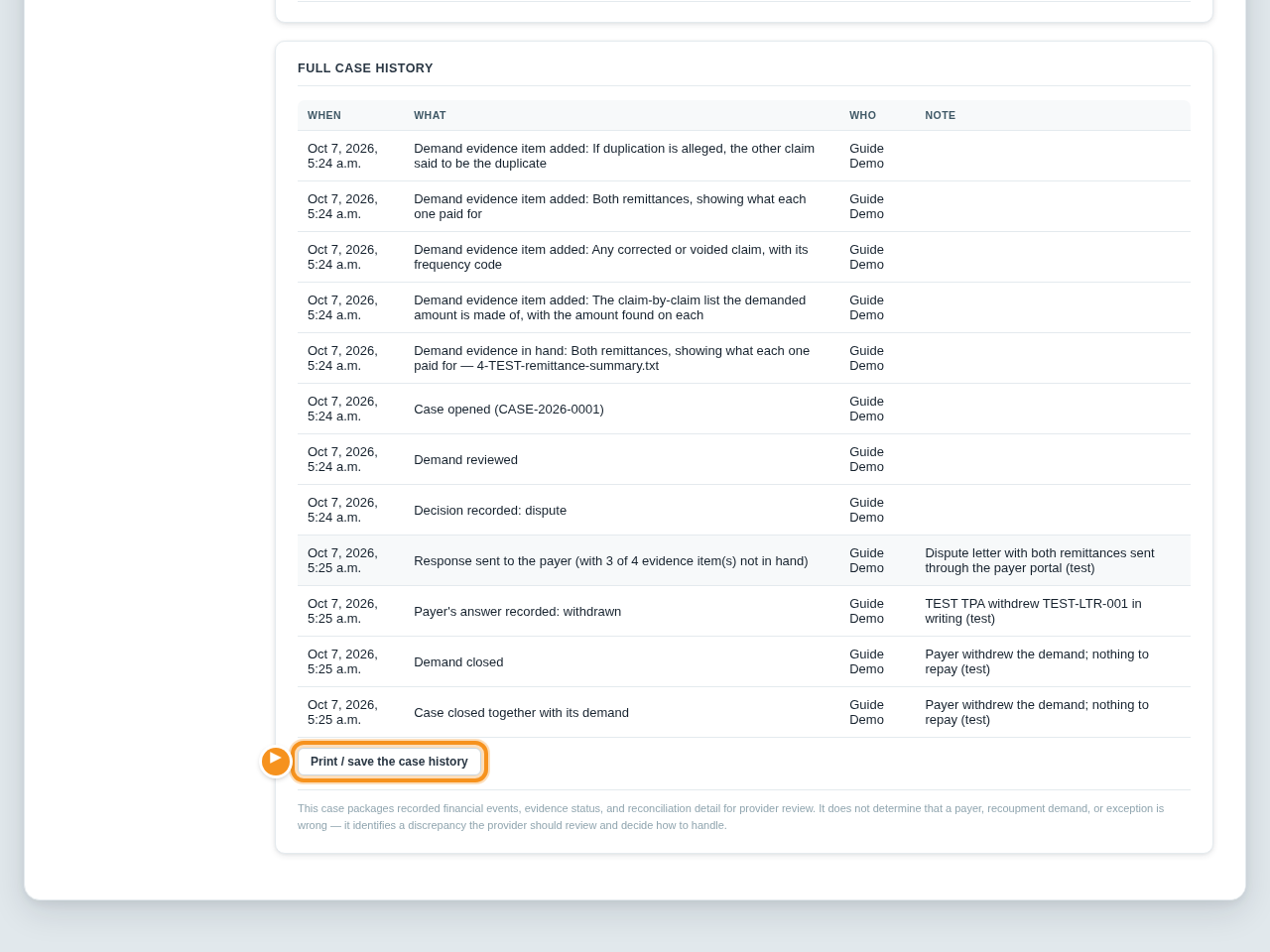
Print the full case history for the response packet, and build the claim's evidence package — every stored document re-verified as the package is built.

What the demand said, what answered it, who did what, and when.

The full case history: every step from the evidence items to the payer's answer and the closing, each with date, time and name, and a Print or save button.

How it is built

It keeps the record. You make the call.

It reports. People decide.

iClaimsGuard never decides that a payer is right or wrong. It lays out what the demand says and what answers it. Every finding is recorded by a person, with how it is known.

Permanent by design.

Entries are added, never edited or deleted. A correction is a new entry. That is what makes the record trustworthy in a dispute.

Every figure traceable.

Paid, recouped and still at stake are computed from the claim's own recorded events — each with how it was reached, never an opinion. The amount demanded is recorded exactly as the letter states it.

Normal is over.
See it for yourself.

Earned. Proven. Defended.

Sign in to a private demo, load the sample claims, record the sample demand letter and take it all the way to a closed case. The Instructions switch walks you through every step.

iClaimsGuard is an analytical record of a provider's own claims, payments and demands. It is not legal advice, it does not decide that a payer or a demand is wrong, and it does not guarantee reversal, recovery, appeal success or elimination of a recoupment. The demo holds sample data only: do not enter real patient information.